ReviewMcRuffy
Curriculum Spotlight Review By
Mary Pride Originally published in Practical Homeschooling
#45 Copyright 2002 Home Life, Inc. PO Box 1190, Fenton MO 63026-1190 (800)
346-6322 www.home-school.com/catalog Used by permission In 1992,
Brian Davis, a preschool through third-grade teacher with years of experience
in both public and private schools, started McRuffy Press. His goal: to create
educational materials that were easy to teach, solidly educational, and used a
very efficient and practical approach. Out of this came the McRuffy Curriculum:
three grades each of math and language arts so far. The materials are designed
to be equally useful in the homeschool and classroom, and have been used successfully
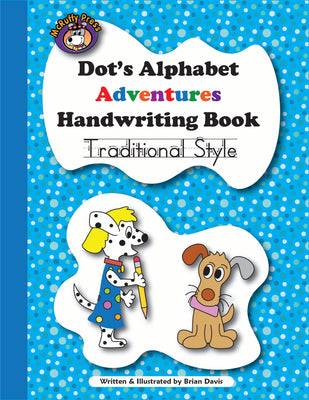
in schools and by homeschool families for years. The McRuffy Kindergarten
Dynamic Phonics and Reading with Spelling and Handwriting course includes
all this, for under $100: - Ringbound teacher’s manual with 175 scripted
daily lesson plans and oodles of teacher helps, including a list of games to play
and hints for teaching kinesthetic-tactile children. Reproducible forms in the
back include lined handwriting paper and many pre-writing drill sheets.
- First
Step Readers. Ten four-page books with short-vowel stories illustrated with black-and-white
line drawings; all words in a book appear in a word list on its back cover.
- Reading
Books (20 larger 12-page books proceed through blends, some vowel diphthongs,
and final e words; same format as First Step Readers)
- Two spiral-bound
student workbooks with pages numbered to correlate to lessons: a handy feature.
The workbook activities fit my “just enough” test; enough seatwork to emphasize
the lesson, not so much as to constitute boring twaddle.
- A huge bundle
of cut-’em-out-yourself flashcards: alphabet cards, word cards, and two handwriting
guides (traditional manuscript and modern pre-cursive), all printed on cardstock
- Sliders and Wheels: You cut these out from the preprinted colored sheets
to make “sliders” (where you pull a letter or combination of letters through the
slot to make words with the letters around it) and “wheels” (here you have one
circle with outer slots missing and rotate another circle behind it, bringing
letters in line with the slots to make more words). If you’ve never taught kindergarten
before, you’ll think these are the most clever inventions ever. If you’ve taught
in a classroom, you’re probably familiar with the concept, but must still admire
the inexpensive and extensive sets that only need scissors, glue, and brads to
put together. For greater durability, you might want to laminate these.
- Make-It,
Play-It Game Pack. If you’re familiar with “file folder” games, that’s what these
are. The five games—The Fish Pond, Reading Baseball, Ruff’s Lunch, Go Bananas,
and Wiggle Worm—each come in their own file folder. Instructions and preprinted
colored sheets that you cut, paste, and/or brad to make the game components are
all within, as is a rod for a fishing pole (to fish for word parts, naturally!).
The
simple, charming line art, easy-to-follow twaddle-free directions, and friendly
large print make this a winner. An optional Game Pieces Pack is available
consisting of dice, spinner, playing pieces, and all the brads, paper clips, magnets,
etc. to make the file folder games. I should mention also that the games
sets, sliders and wheels, flashcards, and readers each come in their own zip-lock
plastic bags, which makes them easy to keep organized. Thanks, Brian! The
First Grade Dynamic Phonics and Reading with Spelling, Handwriting, and Language
course also includes a ringbound Teacher’s Manual, two spiral-bound student
workbooks, a flashcard set, and a set of readers. However, none of these are the
same as in the K program. The 28 readers progress systematically from where the
K readers left off. Now that the child can read more words, the stories are more
clever. Each features a problem that the central character has to resolve. Our
favorites are the readers featuring “Super Pork,” a superhero with no super powers
whatsoever. The flashcards are all word cards, and a huge bunch they are. The
Teacher’s Manual not only includes 160 scripted lessons, but answers to workbook
pages, tests, and a test answer key. You will note that Mr. Davis gives kids at
even this age a chance to practice standardized test-taking skills, as some of
the exercises require students to fill in ovals just as they do on standardized
tests. The “language” added at this grade level includes excellent reading conprehension
questions woven into the lessons as discussion questions, rather than just appearing
as multiple-choice workbook problems, Handwriting books are optional: your choice
of traditional, “modern” (pre-cursive), and cursive. The Second Grade
Dynamic Phonics and Reading with Spelling and Handwriting and Language is
as far as this series has yet progressed. Again, you get a Teacher’s Manual, two
student workbooks, and yet another set of 28 readers which pick up where the First
Grade set left off. Kids using this course learn basic parts of speech (nouns,
pronouns, verbs, adjectives, and adverbs), prefixes, suffixes, alphabetizing,
and lots more as well as reading, handwriting, and spelling. Dictation sentences
are a daily feature. The Teacher’s Manual includes 160 daily lesson plans plus
weekly quizzes, quarterly tests, answer keys for tests/quizzes/workbook exercises,
and the text of all the readers so you can follow along while the child doesn’t
have to sit right on your lap, Optional materials are the handwriting books, plus
two “transition to cursive” books. All components are available separately
in all grade levels, as are optional handwriting books (traditional, modern, and
cursive). For those who wish the most simple, inexpensive phonics program
possible using the McRuffy method, there’s the standalone Dynamic Phonics Learning
Book. This oversized spiral-bound book of more than 200 pages includes all the
phonics from grades K to 2 of the full McRuffy curriculum. Lessons 1 to 32 in
the Dynamic Phonics Learning Book correspond to the K level; lessons 33–80 correspond
to the first-grade level; while lessons 81–98 take you the rest of the way through
second grade. To save money, the students write their own readers from parental
dictation. McRuffy Curriculum math courses are manipulative-based. Complete
manipulative kits are available, as are individual manipulatives, so you can just
buy the pieces you don’t already have. None of the math courses include
the manipulatives sets, which must be purchased separately. The Kindergarten
[Basic] Math course includes a spiral-bound Teacher’s Manual with 175 daily
lessons, a spiral-bound student workbook that confusingly looks exactly like the
Teacher’s Manual from the front, and a set of “mats” and “charts.” The latter
are printed on oversized colored paper or cardstock, and include a wide variety
of useful helps. The paper charts are a number line, number word chart, number
writing chart, days of the week chart, and months of the year chart. The cardstock
mats include nine patterns to create with pattern blocks (answers are on the other
side), flashcards to cut out (dot flashcards, time flashcards, number words, and
numbers from 0–104), attribute shapes to cut out, a Hundred Board (he calls it
a “Number Chart”), and more. At the K level, concepts taught are calendar
activities, counting and number identification, shape identification, beginning
addition, reading time to the half hour, ordinal numbers, skip counting, place
value, patterns, addition number words, and beginning subtraction. Concepts are
taught one at a time, and there is not a lot of review unless you choose to add
it as part of your daily routine. The student workbook has all the familiar activities:
cut and paste, fill in the blank, coloring, matching, and so on. Tests are in
the back of the teacher’s manual. The First Grade Math course moves
up to a ringbound teacher’s manual. After the teaching tips and 175 daily lessons,
there’s a set of workbook answer keys, tests and quiz drill sheets. Instead of
a separate pack of charts and mats, reproducible chart and mat forms are contained
in the teacher’s manual. The student workbook is mostly straightforward calculation
problems, with most of the coin, time, attribute and other practice done with
manipulatives outside the workbook. Topics covered are counting to 500, basic
graphing, measuring, time to the nearest five min-utes, counting money, estimation,
place value to the hundreds, two- and three-digit addition and subtraction, multiplying
by two, simple geometry, reading thermometers, and logic with attribute shapes.
The Second Grade Math program has only 160 daily lessons in its
teacher’s manual and student workbook. Along with basic manipulative exercises
and workbook exercises, you now also have “daily auditory exercises.” For example,
in lesson 149, the teacher reads various dollar amounts aloud, and the student
is supposed to write each in the appropriate box. This helps teach listening skills—a
very valuable skill! Timed tests are also introduced at this level. In second
grade, kids are taught addition and subtraction up to four digits with regrouping,
adding up to four numbers, Roman numerals, multiplication facts, division facts
to 4, reading thermometers, measuring, counting money, time-telling to the nearest
five minutes, place value to 10,000s, introduction to fractions, geometric reasoning,
and odd and even numbers. As you can see, this curriculum is not another
“kitchen table” job by a would-be but unpracticed curriculum designer. Over the
years, McRuffy Press founder Brian Davis has written five reading programs incorporating
over 100 reading books. He is also the author of seven math curriculums. His first
reading program was published in 1992 by Powerline Programs of Palmdale, California.
Powerline currently publishes his Basic Training Reading Program, Math Attack
math tutoring series, and Step One Reading, all of which were designed for remedial
tutoring in a school setting. This makes sense, because as well as being a certified
elementary teacher and a certified Reading Specialist, Brian has also worked as
a reading resource teacher. So, what’s my final thought on the McRuffy
Curriculum? Those looking for an inexpensive, no-frills introduction to the basics
that still has some charm and style need look no farther. Mary
Pride Note from McRuffy Press: Practical Homeschooling
is a bi-monthly magazine published by leading homeschool expert, Mary Pride.
You may also visit Practical Homeschooling web-site at www.home-school.com.
|